Key takeaways
- An inspection finds mold and the moisture causing it. A test measures what's in the air or on a surface.
- Visible mold usually needs removing whatever the lab says, so a test often adds cost without changing the plan.
- Testing helps with hidden mold, real estate deals, landlord-tenant issues and clearance after cleanup.
- Air samples are compared with an outdoor sample. Surface samples identify what's growing on one spot.
- Home test kits from the hardware store are hard to interpret, because mold spores are present nearly everywhere.
Most people who search for a mold test have one of two things going on. Either they can see mold and want to know how bad it is, or they smell something musty and can’t find the source. Those call for different things.
What an inspection tells you
An inspector looks for growth and, more importantly, for water. They check the attic, crawl space and basement, look under sinks and around windows, read moisture levels in walls and floors, and sometimes use a thermal camera to find cold, wet spots. You come away knowing where the mold is, roughly how much there is, and what’s feeding it.
What a test tells you
Testing sends samples to a lab. There are two common kinds:
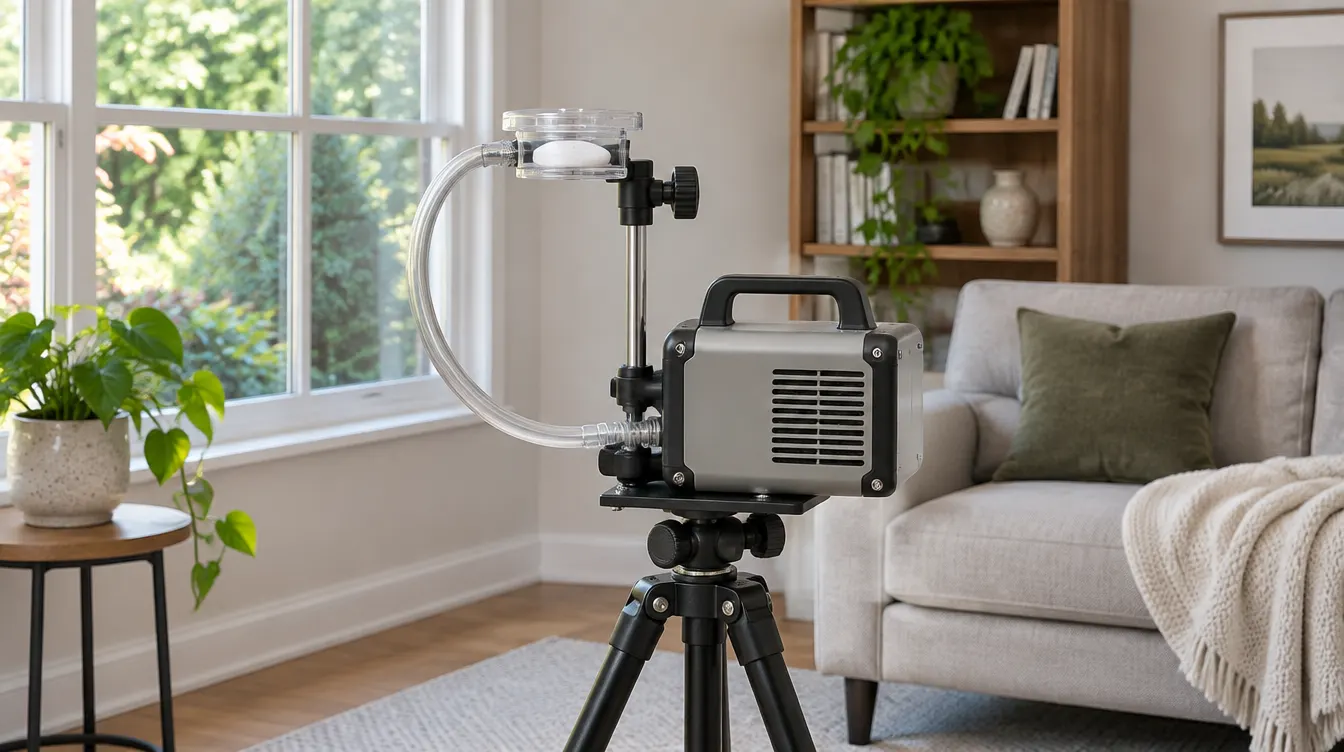
- Air samples pull a measured amount of air through a cassette. The lab counts and identifies spores. An outdoor sample taken the same day gives a baseline, because outdoor air always has spores in it.
- Surface samples (swab or tape) come from a specific spot and tell you what’s growing there.
What a test can’t do is tell you where the moisture problem is. It also can’t say whether a particular person will react.
When to skip the test
You see a dark patch spreading on the drywall under the bathroom window. The drywall is soft. That section has to come out and the window needs sealing, and no lab result will change that. Here, spend the money on the inspection and the fix.
The same goes for most attic jobs where the staining is plain to see on the roof deck.
When testing is worth it
- You smell mold and can’t find it. Air sampling in different rooms, compared with outdoors, can point toward the problem area.
- A house sale. Buyers, sellers and lenders sometimes want documentation.
- Renting. Tenants and landlords may both want something on paper.
- After remediation. Clearance testing before walls get closed up confirms the area is clean.
- Health questions in the household. Some doctors find test results useful. Ask yours.
Inspection first
In Spokane, a lot of mold traces back to the same few causes: attic condensation in winter, damp crawl spaces after snowmelt, and leaks. An inspection finds those. Testing is a tool the inspector can add when there’s a reason for it.
If you’re not sure what you need, describe the situation on the request form. The company can tell you whether testing makes sense before charging for it. More on what an inspection covers is on our mold inspection page.
Frequently asked questions
Are DIY mold test kits worth it?
They usually show that mold spores exist, which is true almost everywhere, indoors and out. Without an outdoor comparison and someone to interpret the results, they rarely tell you what to do next.
What is clearance testing?
Testing done after remediation, before walls are closed up, to check that the work area is clean. Some homeowners hire a different company for it so the check is independent of the company that did the removal.
Will a test tell me if the mold is toxic?
A lab can identify mold types, but that doesn't answer health questions for a specific person. For health concerns, talk to a doctor. For the house, mold growing indoors should be removed and the moisture fixed regardless of type.
My landlord says there's no mold problem. Can testing help?
It can give you documentation. An inspection report with photos and moisture readings is often just as useful, since it shows where the water and growth are.